

Now Reading: Healthy Diet Plan for Students
-
01
Healthy Diet Plan for Students


Student life is busy, stressful, and full of responsibilities. With online classes, projects, assignments, and study pressure, many students choose fast food or skip meals because it saves time. But this makes the body weak, decreases energy, reduces concentration, and affects memory.
The good news is that eating healthy doesn’t always mean difficult recipes or expensive foods. Students only need a simple, balanced, daily eating routine that supports both physical and mental performance.
This guide explains the best healthy diet plan for students in 2025, with budget-friendly meal ideas, a full daily routine, a table chart, and an easy weekly diet plan.
Why a Healthy Diet Is Important for Students
Food is not just for hunger — it fuels the brain.
A healthy student diet improves:
- Concentration in class
- Memory and learning power
- Energy levels
- Mood and motivation
- Immunity
- Sleep quality
- Academic performance
When students eat right, they study better, think faster, and feel more confident.
Common Eating Mistakes Students Make
Most students follow unhealthy eating habits such as:
- Skipping breakfast
- Eating junk food daily
- Drinking sodas and energy drinks
- Eating too much sugar
- Late-night heavy meals
- Low water intake
- No fruits or vegetables
These habits cause tiredness, stress, weight gain, and poor focus.
Let’s fix this with a healthy, simple plan.
Daily Healthy Diet Plan for Students (Simple Routine)
This routine is easy to follow whether you’re in school, college, or university.
1. Breakfast – Your Brain’s Most Important Meal
Breakfast sets the tone for your entire day. Never skip it.
Best Breakfast Options
- Oats + fruits
- Eggs + whole wheat toast
- Peanut butter sandwich
- Yogurt + nuts
- Fruit smoothie
- Upma or poha
- Banana + milk
Why Breakfast Matters
- Boosts brain function
- Improves memory
- Keeps you active in morning classes
- Prevents overeating later
2. Mid-Morning Snack (Optional but Helpful)
If you feel hungry between breakfast and lunch, choose something light.
Healthy Snack Options
- Almonds or walnuts
- Apple or banana
- Yogurt
- Coconut water
- Boiled egg
- Light crackers
Avoid chips, biscuits, sugary drinks, and chocolates.
3. Lunch – Balanced and Filling
Lunch should give long-lasting energy.
Healthy Lunch Ideas
- Rice + dal + vegetables
- Roti + sabzi + salad
- Chicken or fish + rice
- Pasta with vegetables
- Veg pulao + curd
- Sandwich + fruit
- Quinoa bowl
Always Include
- Salad
- At least one fruit
Avoid heavy oily food — it causes sleepiness and laziness in class.
4. Evening Snack – Energy Booster
Students often feel tired in the evening. A healthy snack helps recharge the body.
Healthy Evening Snacks
- Fruit bowl
- Corn
- Sprouts chaat
- Chia pudding
- Healthy popcorn
- Peanut chikki
- Trail mix
Avoid samosas, burgers, and fried snacks.
5. Dinner – Light and Healthy
Dinner should be your lightest meal, so you sleep well.
Dinner Options
- Soup + roti
- Dal + vegetables
- Khichdi
- Grilled chicken + salad
- Vegetable rice
Rule
Eat 2–3 hours before sleeping.
Foods That Boost Brain Power for Students
These foods improve concentration, memory, and mental clarity:
- Almonds
- Walnuts
- Blueberries
- Dark chocolate (small amount)
- Eggs
- Spinach
- Broccoli
- Oats
- Avocado
- Milk
- Salmon (if available)
Add 2–3 of these daily.
Foods Students Should Avoid
Not banned — but limit them:
- Fast food
- Sugary drinks
- Packaged juices
- Chips and snacks
- Ice cream
- Instant noodles
- Too much caffeine
They cause brain fog and lack of energy.
Daily Diet Table for Students
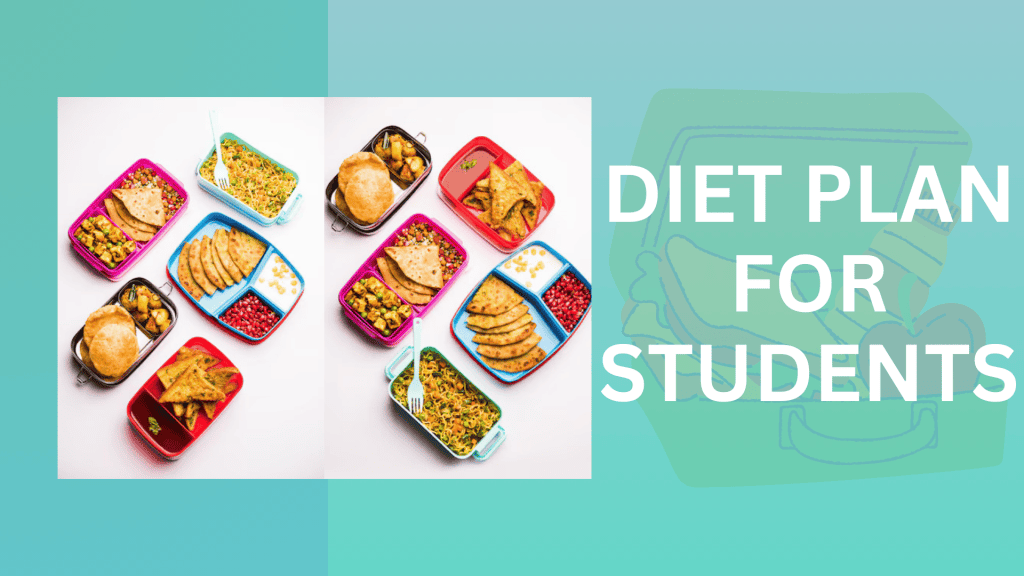
Here is a simple diet table students can follow every day:
| Meal Time | What to Eat | Benefits |
| Breakfast | Eggs, oats, fruits, yogurt | Improves memory & energy |
| Mid-Morning | Fruit or nuts | Prevents cravings |
| Lunch | Roti/Rice + veggies + dal | Balanced nutrients |
| Evening Snack | Sprouts, popcorn, fruit bowl | Boosts energy |
| Dinner | Soup, dal, chapati, or light rice | Helps digestion & sleep |
| Before Bed | Warm milk (optional) | Relaxes the mind |
1-Week Healthy Diet Plan for Students
Day 1
Breakfast: Oats + fruit
Lunch: Rice + dal + veggies
Dinner: Soup + roti
Day 2
Breakfast: Eggs + bread
Lunch: Veg pasta + salad
Dinner: Grilled chicken + veggies
Day 3
Breakfast: Smoothie
Lunch: Roti + sabzi + fruit
Dinner: Khichdi
Day 4
Breakfast: Peanut butter toast
Lunch: Chicken bowl
Dinner: Light curry + rice
Day 5
Breakfast: Yogurt + nuts
Lunch: Veg pulao + curd
Dinner: Dal + vegetables
Day 6
Breakfast: Banana + milk
Lunch: Sandwich + fruit
Dinner: Soup + salad
Day 7
Breakfast: Omelet
Lunch: Quinoa bowl
Dinner: Vegetable rice
Healthy Diet on a Student Budget
Healthy food does NOT need to be expensive.
Budget-Friendly Healthy Foods
- Eggs
- Bananas
- Oats
- Potatoes
- Rice
- Lentils
- Seasonal vegetables
- Chapati
- Peanut butter
These foods are cheap, filling, and nutritious.
Late-Night Studying? Here’s What to Eat
Good Options
- Banana
- Milk
- Almonds
- Yogurt
Avoid
- Coffee
- Energy drinks
- Spicy snacks
- Sugary foods
These harm your sleep and focus.
Frequently Asked Questions (FAQ)
1. What is the best healthy diet plan for students?
A balanced mix of whole grains, vegetables, fruits, protein, nuts, and enough water helps students stay active, focused, and healthy.
2. What should students eat daily for better concentration?
Walnuts, almonds, eggs, oats, berries, spinach, and dark chocolate improve memory and concentration.
3. Which snacks are healthy for students?
Fruits, yogurt, boiled corn, sprouts, nuts, peanut chikki, and homemade popcorn.
4. What foods should students avoid?
Junk food, chips, sugary drinks, instant noodles, and too much caffeine.
5. Is this diet plan suitable for low-budget students?
Yes! Eggs, bananas, potatoes, rice, lentils, oats, and seasonal vegetables are affordable and healthy.
6. How much water should students drink?
6–8 glasses daily to prevent headaches, fatigue, and dehydration.
7. What is the best dinner for students?
Soup, dal, roti, vegetable rice, or grilled chicken — all are light and healthy.
8. Can students eat late at night?
Yes, but choose light snacks like milk, yogurt, or fruit. Avoid heavy meals.
9. What meals help during exam days?
Nuts, fruits, oats, eggs, and yogurt give long-lasting brain energy.
10. Can this diet help with weight control?
Yes, this diet is balanced and prevents overeating, helping students maintain a healthy weight.
Conclusion
A healthy diet plan for students is all about balance — not restriction. By adding simple foods like oats, fruits, nuts, vegetables, eggs, and homemade meals, students can boost their brain power, improve concentration, increase energy, and stay Healthy Diet Plan for Students throughout the school and college years.
Healthy eating = better studying = better results.